About TeleSync

TeleSync began with a simple observation: in a video consultation, a doctor can see and hear the patient, but cannot examine them. We are building the missing bridge, so that distance no longer decides the quality of a check-up.

Our Mission

Healthcare professionals in telemedicine often rely mainly on video calls and patient-reported symptoms, without enough objective examination data. Our mission is to bridge that care gap by extending real examination capability to rural, underserved, elderly and homebound populations, using a portable device and the smartphone people already own.

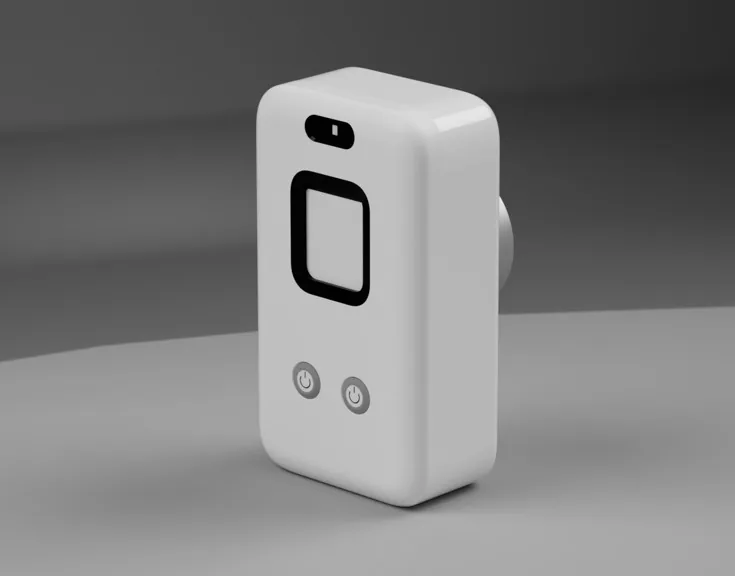
Render of the front of the TeleSync device
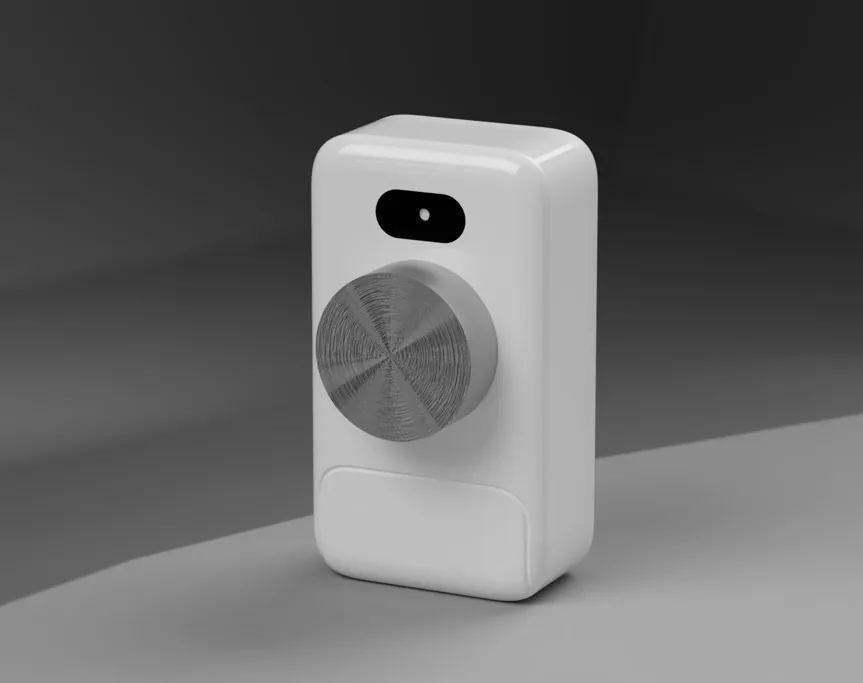
Render of the back of the TeleSync device with its stethoscope head
What we set out to do

Our Objectives

Five goals guide every decision in the device, the app and the dashboard.

Cardiopulmonary assessment

Enable accurate digital recording of heart and lung sounds through guided placement and signal-quality assurance.

Comprehensive vital sign monitoring

Collect key vital signs, including heart rate, SpO₂, temperature and blood pressure, within one standardised workflow.

User empowerment and accessibility

Provide a simple guided application that helps non-expert caregivers and community health workers examine accurately.

Secure data management and connectivity

Support offline-first capture, encrypted storage and secure synchronisation whenever connectivity is available.

Clinician-centric decision support

Deliver structured, reviewable examination data that supports diagnosis, follow-up, triage and escalation.

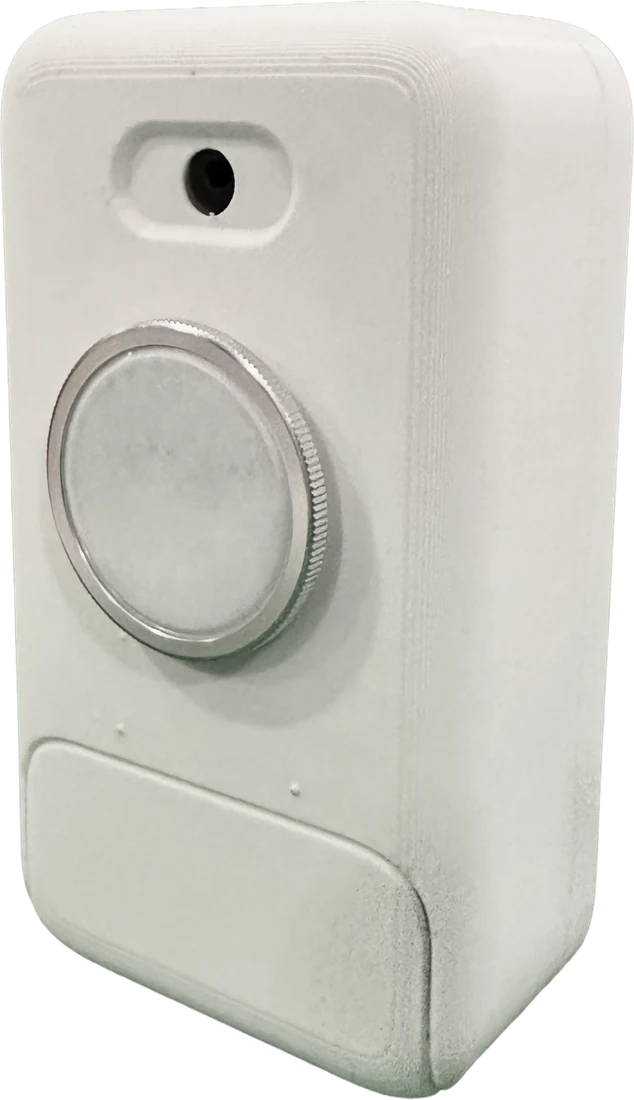
Photograph of the TeleSync prototype from the back, showing the stethoscope diaphragm
Value proposition

What TeleSync offers

  • Objective and reviewableHeart and lung recordings and vital signs reduce reliance on subjective verbal descriptions.
  • Bridges the care gapExtends examination capability to rural, underserved, elderly and homebound populations.
  • Earlier detectionQuality checks and abnormal findings support faster recognition of deterioration.
  • Works in low-connectivity settingsOffline-first design with store-and-forward synchronisation supports continuity of care.
  • Cost-effective and scalableA portable device and ordinary smartphones support broader deployment and fewer avoidable referrals.

Our Story

Three of us, three paths to the same idea. In our own words, here is what inspired each of us to create TeleSync.

Kundol “Canoe” Tangruthaiwanich

Ruamrudee International School, Grade 12

Founder and Lead Engineer

Portrait of Burich Benjarattananon

Burich “BenJ” Benjarattananon

Bangkok Christian College, Grade 12

Research and Development Specialist

My experiences in scientific research and representing Thailand in one of the world’s most prestigious science and engineering competitions, as well as many international innovation exhibitions, shaped my approach to solving real-world problems. Years of research taught me how to apply scientific concepts to practical solutions that could make a real difference in society. My interests began to shift toward medicine and through my volunteer work in hospitals and underprivileged communities I saw first hand the challenges of healthcare accessibility. I am thrilled to be part of the TeleSync team, bringing together my research background and these experiences to work alongside passionate individuals in making healthcare more accessible.
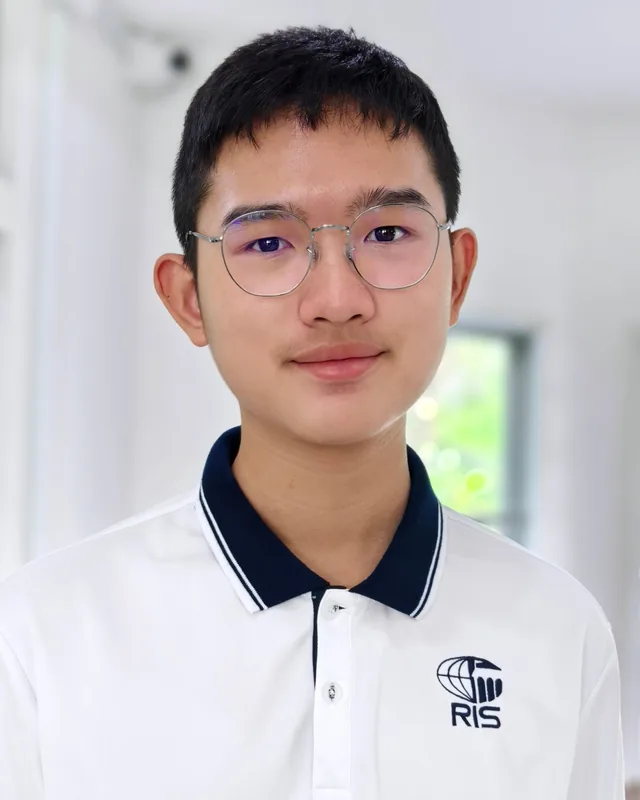
Portrait of Pakawat Poldetch

Pakawat “Messi” Poldetch

Ruamrudee International School, Grade 11

Chief Commercial Officer

My antibiotics research in aquaculture helped me see how biological research connects to the health and livelihoods of communities. Developing an LLM-integrated RAG ChatBot then showed me the value of translating scientific knowledge into practical tools that people can use. As my interests in biology became increasingly focused on medicine and human health, I wanted to bring that same approach to healthcare. This inspired me to aid in the development of Telesync, providing a way to connect patients and healthcare professionals through accessible technology; thus, allowing me to extend my motivation to support communities from aquaculture to human care.

Research foundation

References

TeleSync draws on published work in tele-auscultation, cuffless blood pressure measurement, optical vital-sign sensing and health-workforce access.

  • Cohen, J. B., Byfield, R. L., Hardy, S. T., Juraschek, S. P., Miller, N. H., Mukkamala, R., Picone, D. S., Thiele, R. H., Yang, E., & Brady, T. M. (2025). Cuffless devices for the measurement of blood pressure: a scientific statement from the American Heart Association. Hypertension, 83(3), e00254. doi.org/10.1161/hyp.0000000000000254
  • Fan, M., Wang, Q., Liu, J., Su, L., Wang, B., Xu, H., Li, Q., & Zhang, Z. (2022). Real-world evaluation of the Stemoscope electronic tele-auscultation system. BioMedical Engineering OnLine, 21(1), 63. doi.org/10.1186/s12938-022-01032-4
  • Fragasso, M. (2007). Validation of remote cardiopulmonary examination in patients with heart failure with a videophone-based system. Journal of Cardiac Failure, 13(4), 281–286. doi.org/10.1016/j.cardfail.2007.01.008
  • Hirosawa, T., Harada, Y., Ikenoya, K., Kakimoto, S., Aizawa, Y., & Shimizu, T. (2021). The utility of real-time remote auscultation using a Bluetooth-connected electronic stethoscope: open-label randomized controlled pilot trial. JMIR mHealth and uHealth, 9(7), e23109. doi.org/10.2196/23109
  • Ito, T., Hirosawa, T., Harada, Y., Kakimoto, S., & Shimizu, T. (2022). Evaluation of internet-connected real-time remote auscultation: an open-label randomized controlled pilot trial. Journal of Personalized Medicine, 12(12), 1950. doi.org/10.3390/jpm12121950
  • Miranda-Vega, J. E., Ayala-Figueroa, R. I., Villarreal-González, Y., & Escarcega-Zepeda, P. A. (2026). Comparative assessment of PPG-derived HRV using MAX30102 sensor and analog circuitry with ADS1115 ADC. Sensors, 26(8), 2487. doi.org/10.3390/s26082487
  • Pagaiya, N., Kongkam, L., & Sriratana, S. (2015). Rural retention of doctors graduating from the rural medical education project to increase rural doctors in Thailand: a cohort study. Human Resources for Health, 13(1), 10. doi.org/10.1186/s12960-015-0001-y
  • World Health Organization. (2019, August 7). Health workforce. who.int/health-topics/health-workforce
  • World Health Organization. (2025, December 5). Universal health coverage (UHC). who.int/news-room/fact-sheets/detail/universal-health-coverage-(uhc)
  • Wu, Y., Han, C., Chang, C., Chang, F., Chen, S., Shieh, T., Chen, H., & Lin, J. (2022). Development of an electronic stethoscope and a classification algorithm for cardiopulmonary sounds. Sensors, 22(11), 4263. doi.org/10.3390/s22114263